💧 How To Unclog A Sink
I remember the dread of a stubbornly slow drain, the water pooling instead of disappearing.
It’s a common household headache, but not one you have to pay a plumber for every time.
I’ve tackled countless clogs in my own home and for friends, learning the tricks that actually work to restore smooth-flowing water.
Quick Overview
This guide will walk you through effective, practical steps to clear most sink clogs yourself.
You’ll learn how to identify the problem, use common tools, and prevent future blockages.
- Time needed: 30 minutes to 1 hour
- Difficulty: Beginner
- What you’ll need: Plunger, old towels, bucket, protective gloves, baking soda, white vinegar, adjustable wrench, screwdriver, drain snake (optional), flashlight (optional)
Step-by-Step Instructions
Step 1: Prepare Your Workspace and Assess the Clog
Before you begin, it is important to set up your area properly.
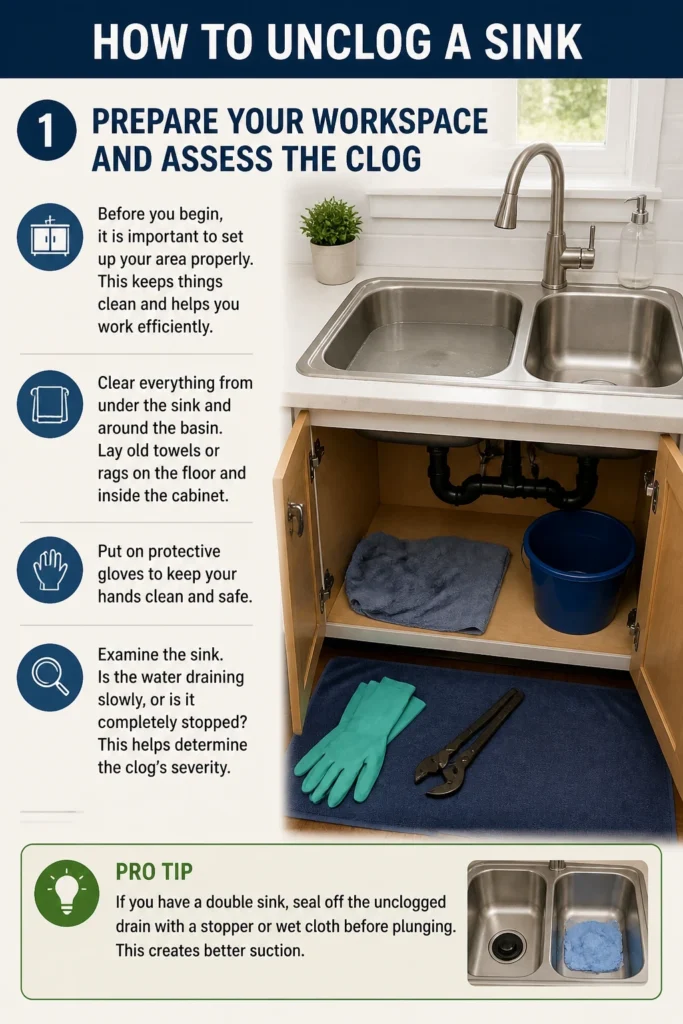
This keeps things clean and helps you work efficiently.
- Clear everything from under the sink and around the basin.
- Lay old towels or rags on the floor and inside the cabinet. This will catch any spilled water.
- Put on protective gloves to keep your hands clean and safe.
- Examine the sink. Is the water draining slowly, or is it completely stopped? This helps determine the clog’s severity.
Pro Tip: If you have a double sink, seal off the unclogged drain with a stopper or wet cloth before plunging. This creates better suction.
Step 2: Start with the Plunger
The humble plunger is often your first and best line of defense against clogs.
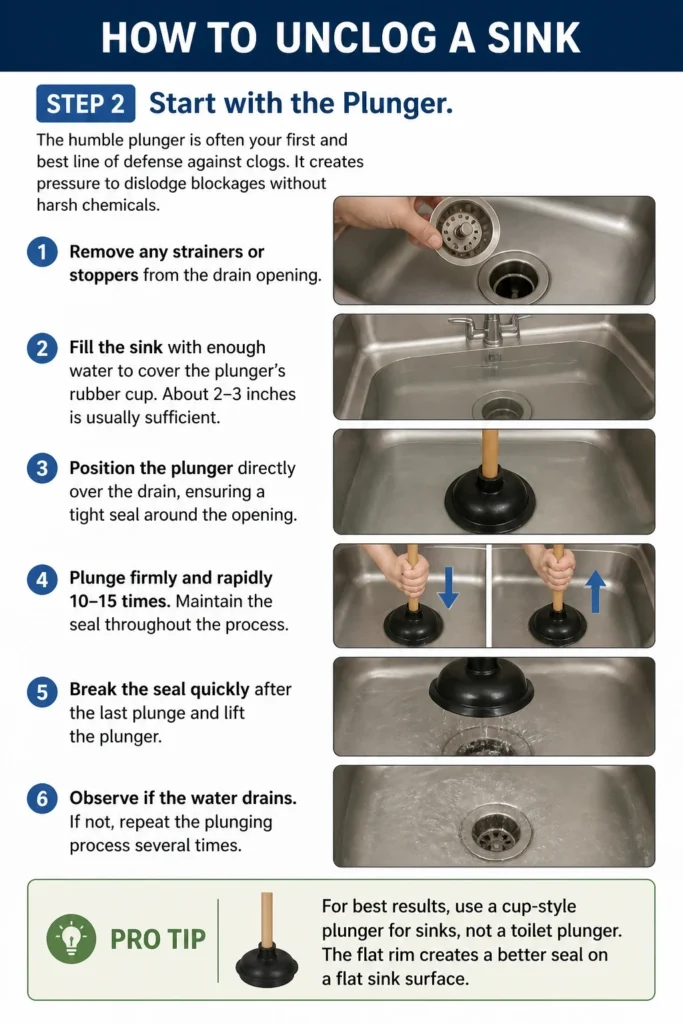
It creates pressure to dislodge blockages without harsh chemicals.
- Remove any strainers or stoppers from the drain opening.
- Fill the sink with enough water to cover the plunger’s rubber cup. About 2-3 inches is usually sufficient.
- Position the plunger directly over the drain, ensuring a tight seal around the opening.
- Plunge firmly and rapidly 10-15 times. Maintain the seal throughout the process.
- Break the seal quickly after the last plunge and lift the plunger.
- Observe if the water drains. If not, repeat the plunging process several times.
Pro Tip: For best results, use a cup-style plunger for sinks, not a toilet plunger. The flat rim creates a better seal on a flat sink surface.
Step 3: Try the Baking Soda and Vinegar Method
If plunging doesn’t work, a natural chemical reaction can sometimes break down softer clogs.
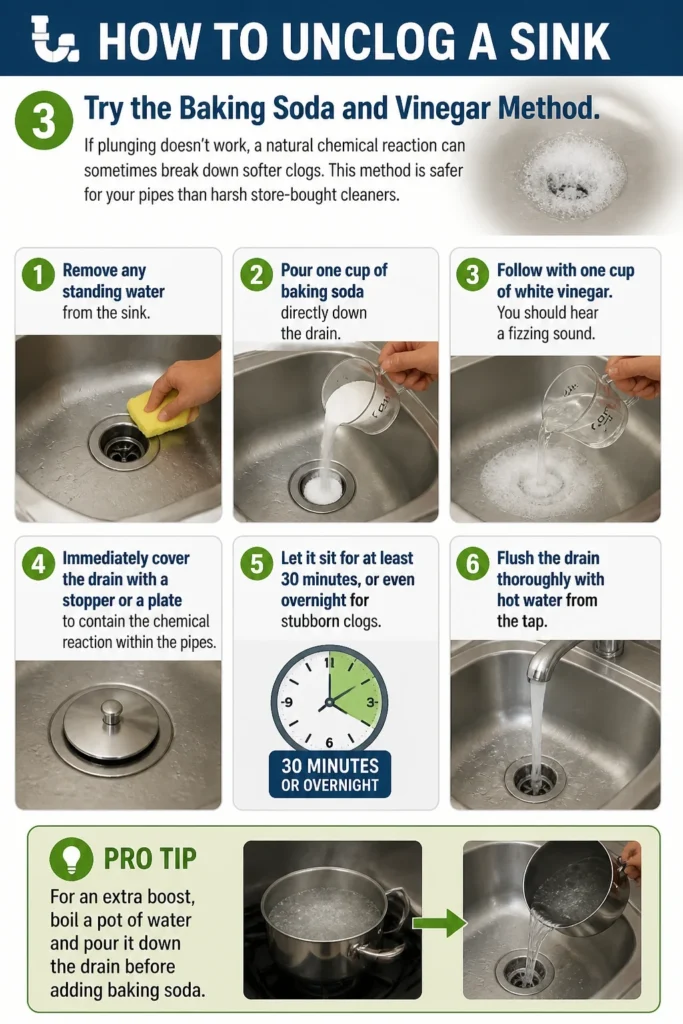
This method is safer for your pipes than harsh store-bought cleaners.
- Remove any standing water from the sink.
- Pour one cup of baking soda directly down the drain.
- Follow with one cup of white vinegar. You should hear a fizzing sound.
- Immediately cover the drain with a stopper or a plate to contain the chemical reaction within the pipes.
- Let it sit for at least 30 minutes, or even overnight for stubborn clogs.
- Flush the drain thoroughly with hot water from the tap.
Pro Tip: For an extra boost, boil a pot of water and pour it down the drain before adding baking soda. This can help loosen grease.
Step 4: Clean the P-Trap
Many clogs occur in the P-trap, the curved pipe section directly under your sink.
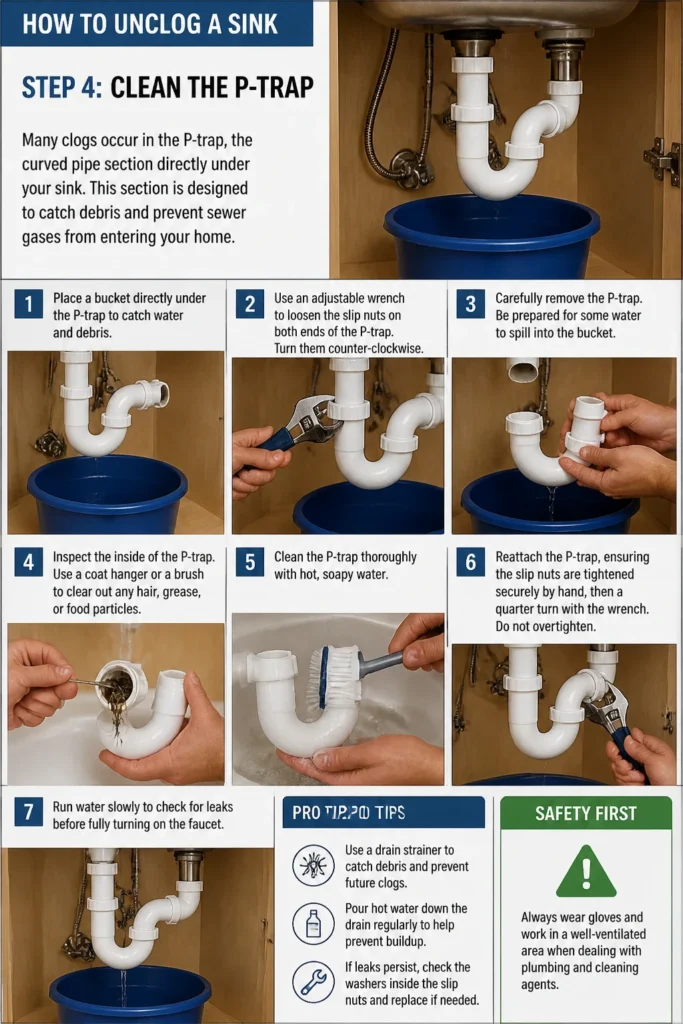
This section is designed to catch debris and prevent sewer gases from entering your home.
- Place a bucket directly under the P-trap to catch water and debris.
- Use an adjustable wrench to loosen the slip nuts on both ends of the P-trap. Turn them counter-clockwise.
- Carefully remove the P-trap. Be prepared for some water to spill into the bucket.
- Inspect the inside of the P-trap. Use a coat hanger or a brush to clear out any hair, grease, or food particles.
- Clean the P-trap thoroughly with hot, soapy water.
- Reattach the P-trap, ensuring the slip nuts are tightened securely by hand, then a quarter turn with the wrench. Do not overtighten.
- Run water slowly to check for leaks before fully turning on the faucet.
Pro Tip: Take a photo of the P-trap before you disassemble it. This can be a helpful reference when putting it back together.
Step 5: Use a Drain Snake (Auger)
If the clog persists after cleaning the P-trap, the blockage might be further down the drainpipe.
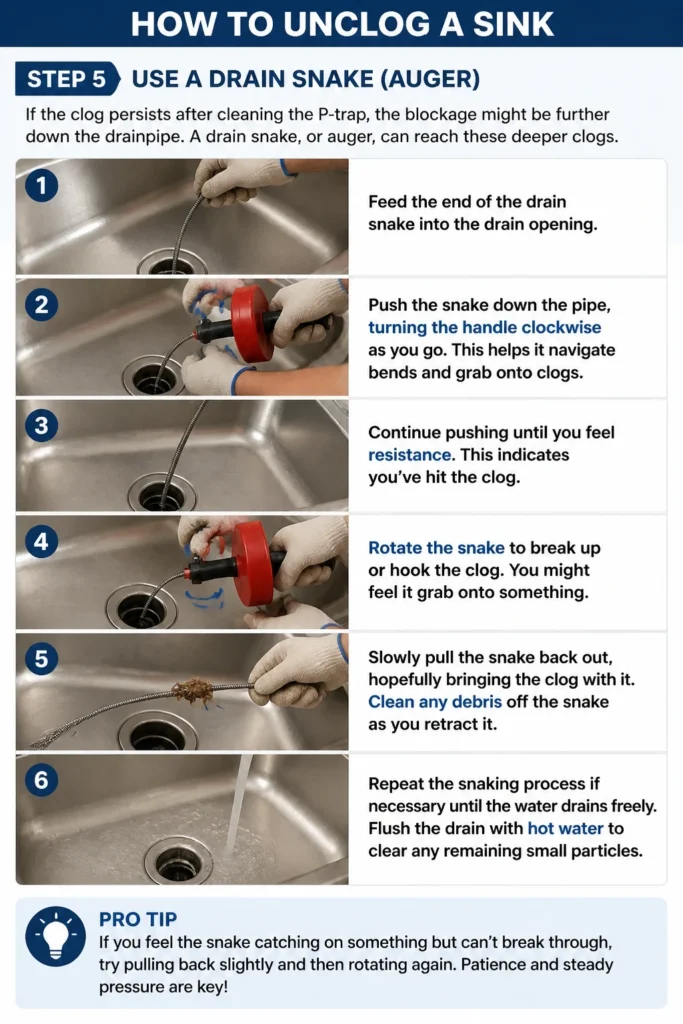
A drain snake, or auger, can reach these deeper clogs.
- Feed the end of the drain snake into the drain opening.
- Push the snake down the pipe, turning the handle clockwise as you go. This helps it navigate bends and grab onto clogs.
- Continue pushing until you feel resistance. This indicates you’ve hit the clog.
- Rotate the snake to break up or hook the clog. You might feel it grab onto something.
- Slowly pull the snake back out, hopefully bringing the clog with it.
- Clean any debris off the snake as you retract it.
- Repeat the snaking process if necessary until the water drains freely.
- Flush the drain with hot water to clear any remaining small particles.
Pro Tip: If you feel the snake catching on something, gently push and twist. Don’t force it, as you could damage the pipe.
Step 6: Consider a Chemical Drain Cleaner (Last Resort)
Chemical drain cleaners should be used as a last resort due to their corrosive nature and potential harm to pipes and the environment.
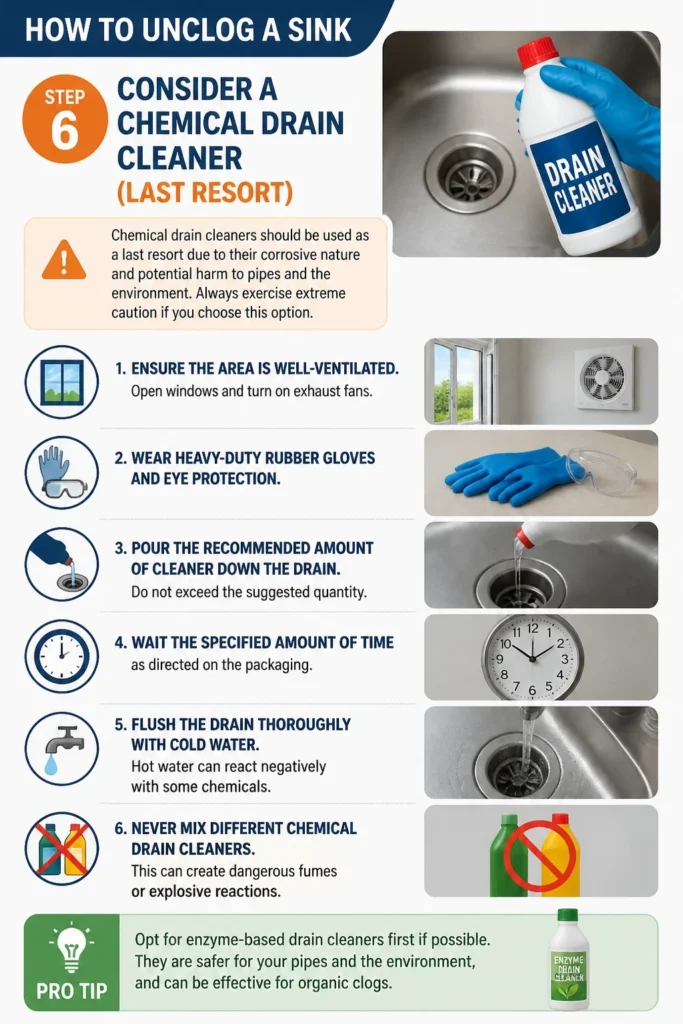
Always exercise extreme caution if you choose this option.
- Read the product label carefully for specific instructions and warnings.
- Ensure the area is well-ventilated. Open windows and turn on exhaust fans.
- Wear heavy-duty rubber gloves and eye protection.
- Pour the recommended amount of cleaner down the drain. Do not exceed the suggested quantity.
- Wait the specified amount of time as directed on the packaging.
- Flush the drain thoroughly with cold water. Hot water can react negatively with some chemicals.
- Never mix different chemical drain cleaners. This can create dangerous fumes or explosive reactions.
Pro Tip: Opt for enzyme-based drain cleaners first if you must use a chemical solution. They are gentler on pipes and the environment, though they work slower.
Step 7: Final Flush and Prevention
Once the clog is cleared, it is important to confirm everything is working correctly and plan for prevention.
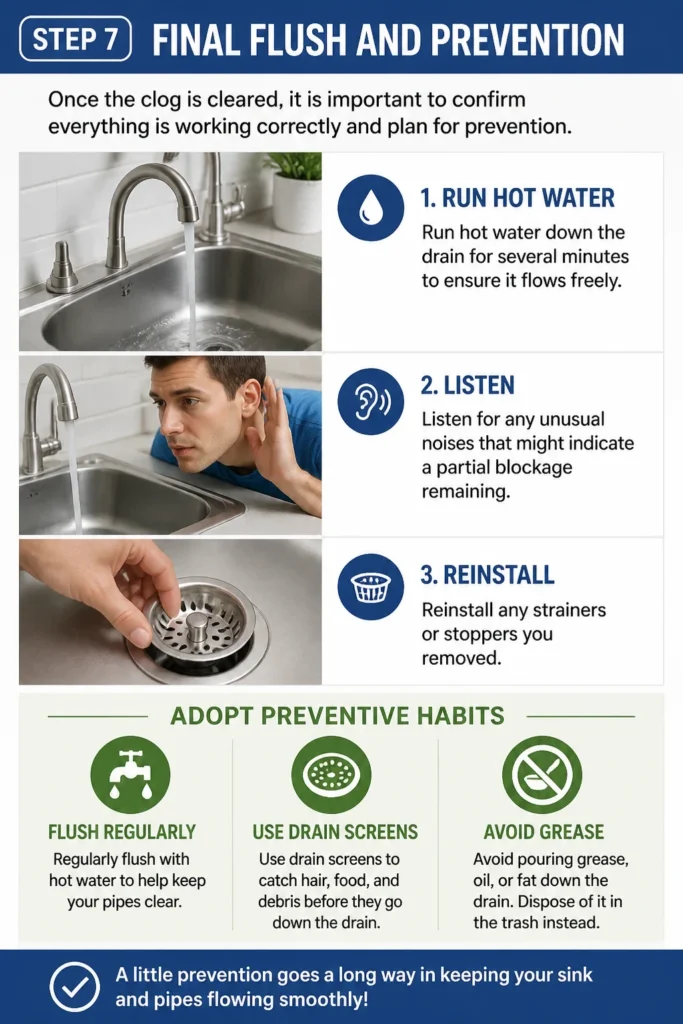
- Run hot water down the drain for several minutes to ensure it flows freely.
- Listen for any unusual noises that might indicate a partial blockage remaining.
- Reinstall any strainers or stoppers you removed.
- Adopt preventive habits like regularly flushing with hot water, using drain screens, and avoiding pouring grease down the drain.
Common Mistakes to Avoid
Using Excessive Force
When plunging or using a drain snake, it is tempting to apply maximum force.
However, too much pressure can damage old or weak pipes, leading to leaks or bigger plumbing problems.
Use firm but controlled motions, allowing the tools to do their work without brute strength.
Ignoring Safety Precautions
Working with drain clogs often involves exposure to grime, bacteria, and potentially harsh chemicals.
Failing to wear gloves and eye protection can lead to skin irritation or eye injury.
Always prioritize your safety by gearing up properly and ensuring good ventilation when using chemical products.
Pouring Harsh Chemicals Blindly
Many people reach for the strongest chemical drain cleaner immediately.
These products can corrode pipes, especially older ones, and are harmful to the environment.
They can also solidify certain types of clogs, making them even harder to remove mechanically.
Always start with gentler methods like plunging or baking soda and vinegar.
Not Cleaning the P-Trap Thoroughly
A common mistake is to simply remove the P-trap, glance inside, and put it back.
Often, debris can cling to the sides or be pushed further down.
Always use a brush or a wire to scrape the inside thoroughly and rinse it with hot, soapy water before reassembling.
Troubleshooting
Still Slow After Plunging and P-Trap Cleaning
If your drain is still slow even after you’ve plunged and cleaned the P-trap, the clog is likely further down the main drain line.
This is when a drain snake (auger) becomes essential to reach and break up deeper blockages.
Ensure you’re feeding the snake far enough into the pipe, past the P-trap and into the wall drain.
Water Backing Up in Another Fixture
If clearing one sink causes water to back up in another nearby sink, tub, or toilet, it indicates a clog in a shared main drain line.
This type of clog is often more serious and requires a longer drain snake, or even professional help.
Attempting to clear it yourself with a standard sink snake might not be enough to reach the deeper blockage.
Foul Odors Persist After Clog is Gone
Even after a clog is cleared, you might notice lingering unpleasant odors.
This can happen if residue from the clog remains stuck to the pipe walls or if bacteria have built up.
Flush the drain with a mixture of hot water and a few drops of dish soap, or try another baking soda and vinegar flush to neutralize odors.
Key Takeaways
- Always start with the simplest, least invasive methods first, like plunging.
- Safety is paramount; wear gloves and eye protection, especially with chemicals.
- The P-trap is a common culprit for clogs and is relatively easy to clean.
- Avoid harsh chemical drain cleaners as a primary solution; they can damage pipes.
- A drain snake is invaluable for reaching clogs beyond the P-trap.
- Regular maintenance, such as using drain screens and flushing with hot water, prevents future clogs.
Frequently Asked Questions
How often should I clean my drains?
Preventative cleaning is key. Aim to flush your drains with hot water weekly and consider a baking soda and vinegar treatment monthly.
Using drain screens can also significantly reduce the frequency of clogs by catching hair and food particles.
Are chemical drain cleaners safe for all pipes?
No, chemical drain cleaners are not safe for all pipes. They can be particularly damaging to older PVC pipes, galvanized steel, or cast iron pipes.
They can also react with certain materials, causing corrosion or weakening the pipe structure over time.
Always check the product label for compatibility with your plumbing system.
What causes most sink clogs?
In kitchen sinks, grease and food particles are the primary culprits. In bathroom sinks, hair combined with soap scum forms stubborn blockages.
Over time, these materials accumulate and narrow the pipe, eventually leading to a full clog.
When should I call a plumber?
You should call a plumber if you’ve tried all the DIY methods without success, especially if the clog is deep or affecting multiple fixtures.
Also, if you suspect a broken pipe, notice sewage backing up, or experience persistent foul odors, professional help is warranted.
Our Top Recommended Finds
- Heavy-Duty Cup Plunger: Essential for creating strong suction and dislodging most common sink clogs. Its durable rubber ensures a tight seal.
- Manual Drain Snake (Auger): Perfect for reaching deeper clogs that a plunger can’t touch. Look for one with a comfortable handle and a flexible cable.
- Enzyme-Based Drain Cleaner: A safer, natural alternative to harsh chemicals. These cleaners use beneficial bacteria to break down organic matter without damaging pipes.
Empower Yourself Against Clogs
Tackling a clogged sink might seem daunting at first, but with the right tools and knowledge, it’s a completely manageable task.
You now possess the practical steps to diagnose, clear, and even prevent most common sink blockages.
Take confidence in your newfound DIY plumbing skills and keep your drains flowing freely.