
✍️ How To Make Journal Diary
Starting a journal diary can feel like embarking on a quiet adventure with yourself.
It’s a powerful way to process thoughts, track growth, and simply exist more mindfully.
I’ve kept a journal for years, finding immense clarity and comfort in its pages, and I’m excited to share a straightforward path to beginning your own.

Quick Overview
This guide will walk you through the simple steps to create a personal journal diary, helping you establish a meaningful practice.
You’ll learn how to choose your materials, set intentions, and begin writing with confidence.
- Time needed: 30 minutes to 1 hour for initial setup; ongoing commitment is flexible.
- Difficulty: Beginner
- What you’ll need: A notebook, a writing tool, and a desire to reflect.
Step-by-Step Instructions
Step 1: Gather Your Supplies
The beauty of starting a journal is its simplicity. You don’t need much to begin this journey.
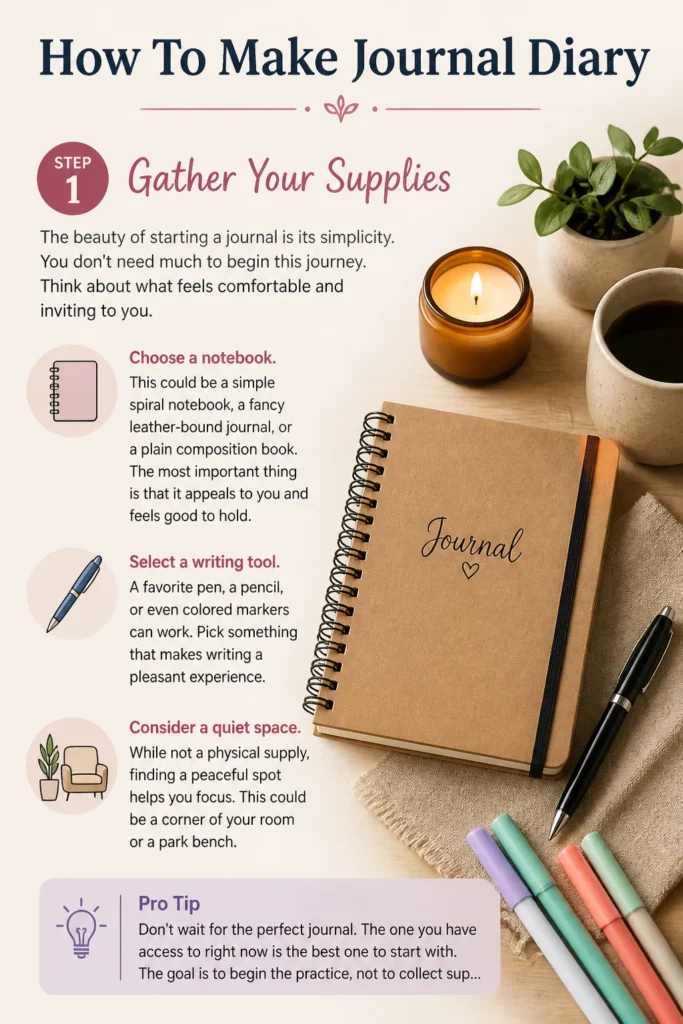
Think about what feels comfortable and inviting to you.
- Choose a notebook. This could be a simple spiral notebook, a fancy leather-bound journal, or a plain composition book. The most important thing is that it appeals to you and feels good to hold.
- Select a writing tool. A favorite pen, a pencil, or even colored markers can work. Pick something that makes writing a pleasant experience.
- Consider a quiet space. While not a physical supply, finding a peaceful spot helps you focus. This could be a corner of your room or a park bench.
Pro Tip: Don’t wait for the “perfect” journal. The one you have access to right now is the best one to start with. The goal is to begin the practice, not to collect supplies.
Step 2: Choose Your Journal Type
Journals come in many forms, and understanding a few common types can help you decide on your approach.
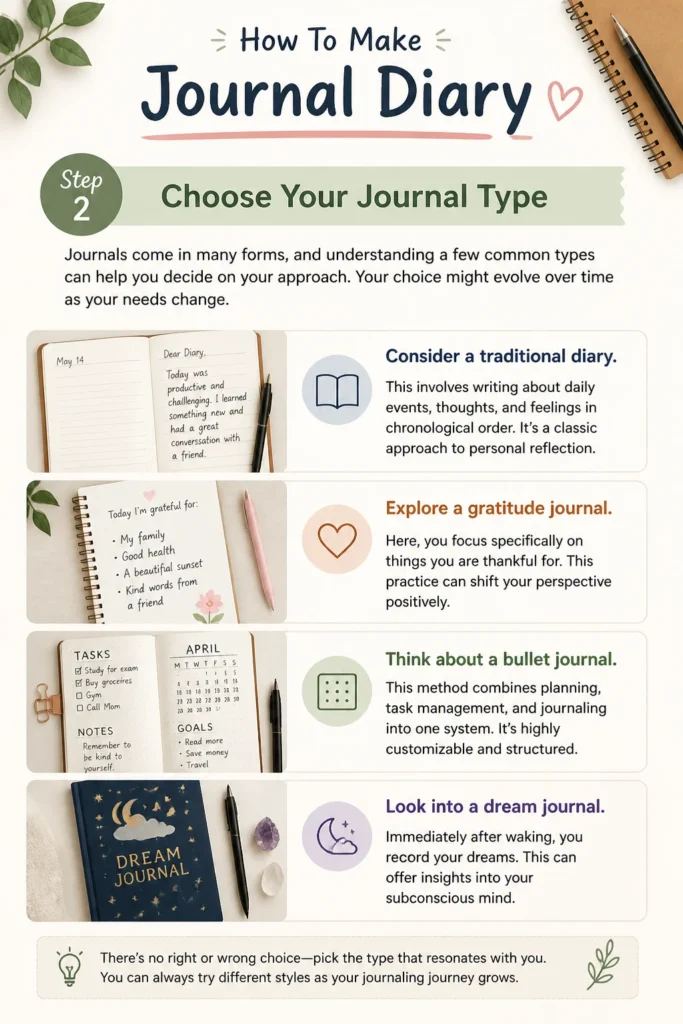
Your choice might evolve over time as your needs change.
- Consider a traditional diary. This involves writing about daily events, thoughts, and feelings in chronological order. It’s a classic approach to personal reflection.
- Explore a gratitude journal. Here, you focus specifically on things you are thankful for. This practice can shift your perspective positively.
- Think about a bullet journal. This method combines planning, task management, and journaling into one system. It’s highly customizable and structured.
- Look into a dream journal. Immediately after waking, you record your dreams. This can offer insights into your subconscious mind.
Step 3: Set Your Intention
Before you even write your first word, consider why you want to keep a journal.
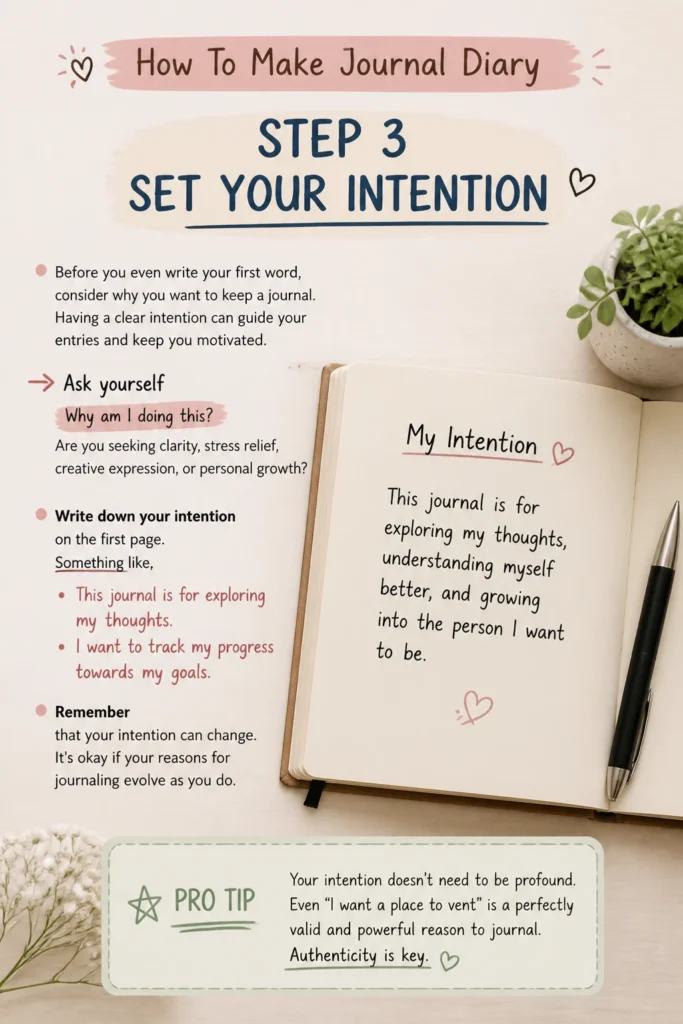
Having a clear intention can guide your entries and keep you motivated.
- Ask yourself: “Why am I doing this?” Are you seeking clarity, stress relief, creative expression, or personal growth?
- Write down your intention on the first page. Something like, “This journal is for exploring my thoughts” or “I want to track my progress towards my goals.”
- Remember that your intention can change. It’s okay if your reasons for journaling evolve as you do.
Pro Tip: Your intention doesn’t need to be profound. Even “I want a place to vent” is a perfectly valid and powerful reason to journal. Authenticity is key.
Step 4: Design Your First Entry
The blank page can feel intimidating, but there’s no right or wrong way to start.
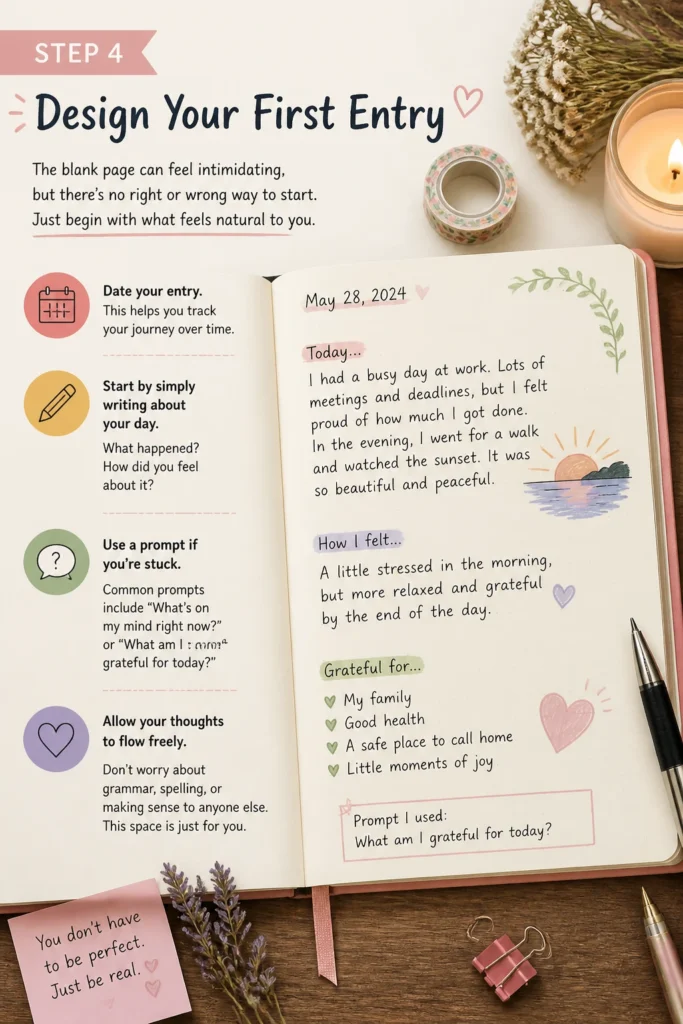
Just begin with what feels natural to you.
- Date your entry. This helps you track your journey over time.
- Start by simply writing about your day. What happened? How did you feel about it?
- Use a prompt if you’re stuck. Common prompts include: “What’s on my mind right now?” or “What am I grateful for today?”
- Allow your thoughts to flow freely. Don’t worry about grammar, spelling, or making sense to anyone else. This space is just for you.
Step 5: Establish a Routine
Consistency is more important than duration when it comes to journaling.
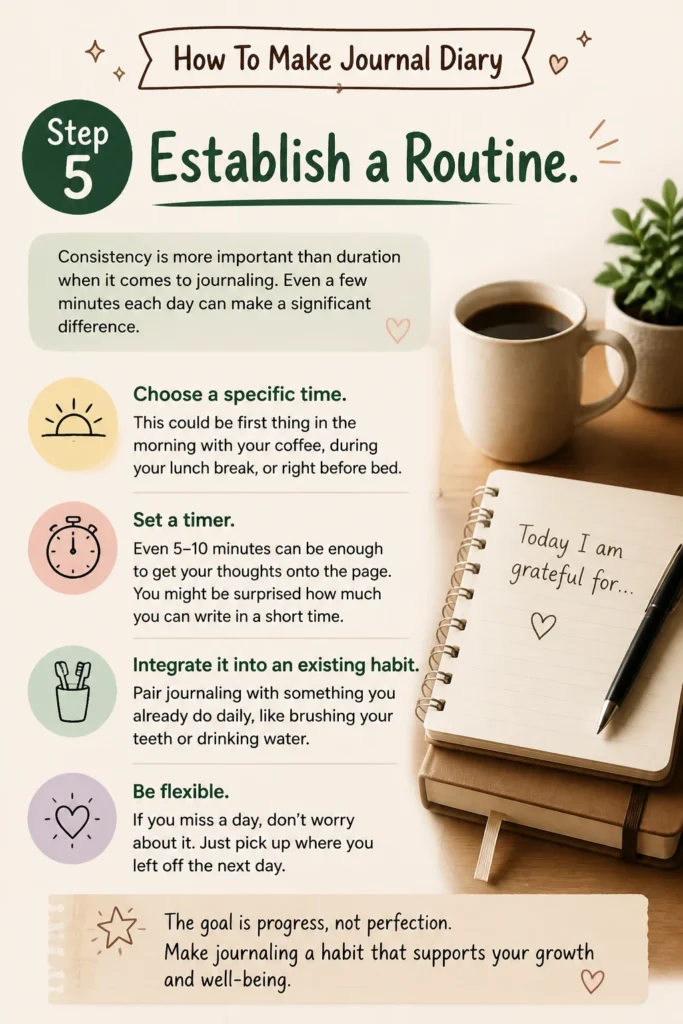
Even a few minutes each day can make a significant difference.
- Choose a specific time. This could be first thing in the morning with your coffee, during your lunch break, or right before bed.
- Set a timer. Even 5-10 minutes can be enough to get your thoughts onto the page. You might be surprised how much you can write in a short time.
- Integrate it into an existing habit. Pair journaling with something you already do daily, like brushing your teeth or drinking water.
- Be flexible. If you miss a day, don’t worry about it. Just pick up where you left off the next day.
Step 6: Explore Different Prompts
Sometimes, we need a little nudge to get our thoughts flowing.
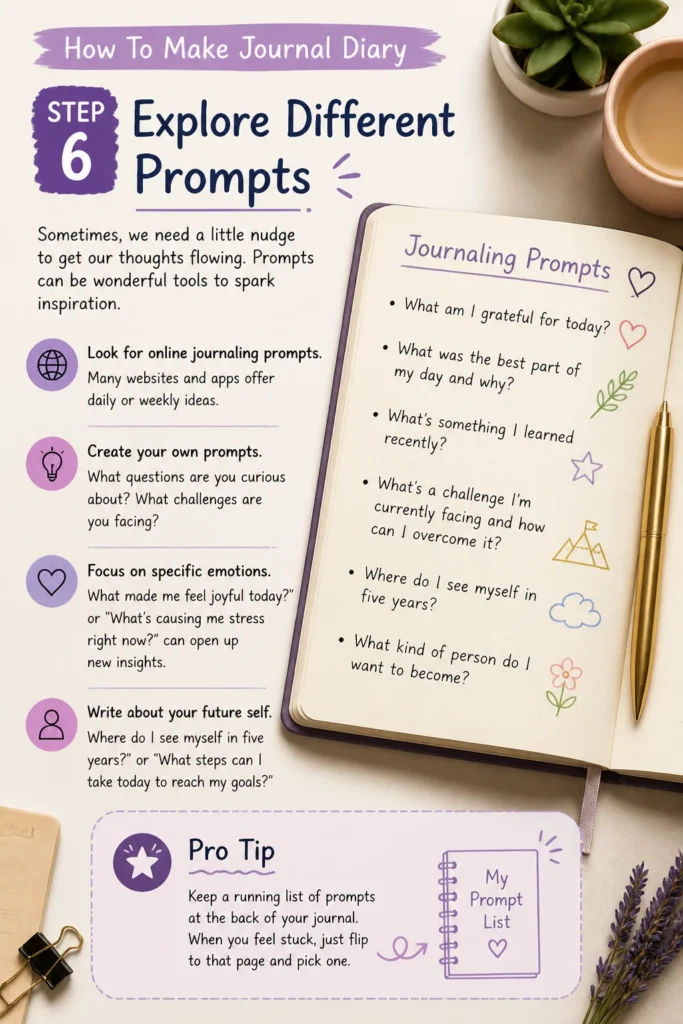
Prompts can be wonderful tools to spark inspiration.
- Look for online journaling prompts. Many websites and apps offer daily or weekly ideas.
- Create your own prompts. What questions are you curious about? What challenges are you facing?
- Focus on specific emotions. “What made me feel joyful today?” or “What’s causing me stress right now?” can open up new insights.
- Write about your future self. “Where do I see myself in five years?” or “What steps can I take today to reach my goals?”
Pro Tip: Keep a running list of prompts at the back of your journal. When you feel stuck, just flip to that page and pick one.
Step 7: Review and Reflect
Journaling isn’t just about writing; it’s also about looking back at what you’ve written.
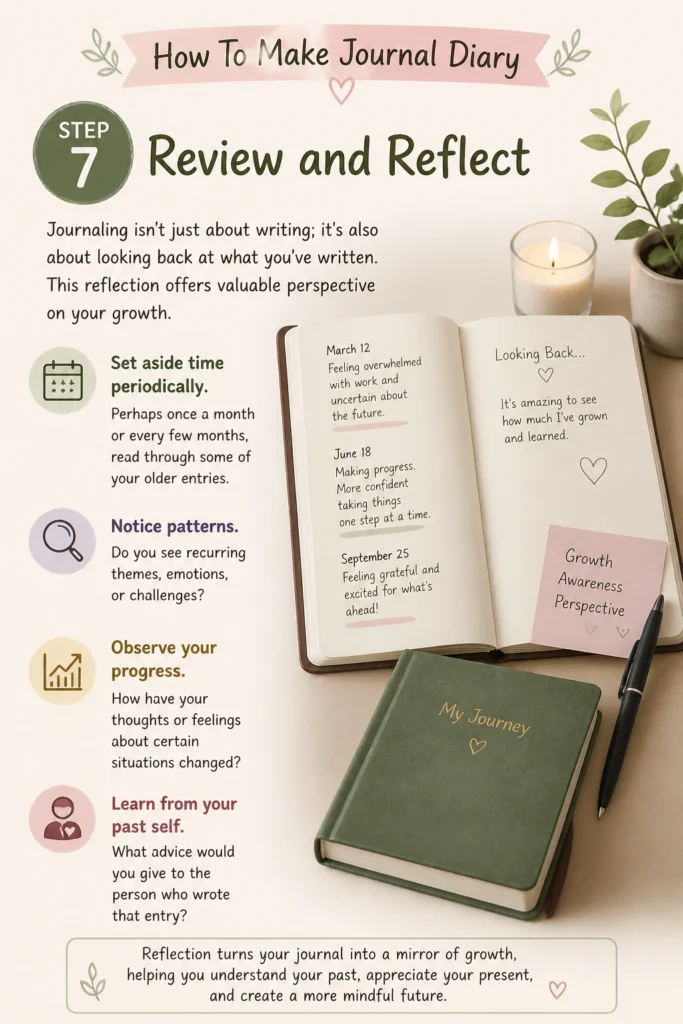
This reflection offers valuable perspective on your growth.
- Set aside time periodically. Perhaps once a month or every few months, read through some of your older entries.
- Notice patterns. Do you see recurring themes, emotions, or challenges?
- Observe your progress. How have your thoughts or feelings about certain situations changed?
- Learn from your past self. What advice would you give to the person who wrote that entry?
Step 8: Personalize Your Pages
Your journal is a personal space, and making it uniquely yours can make the practice even more enjoyable.
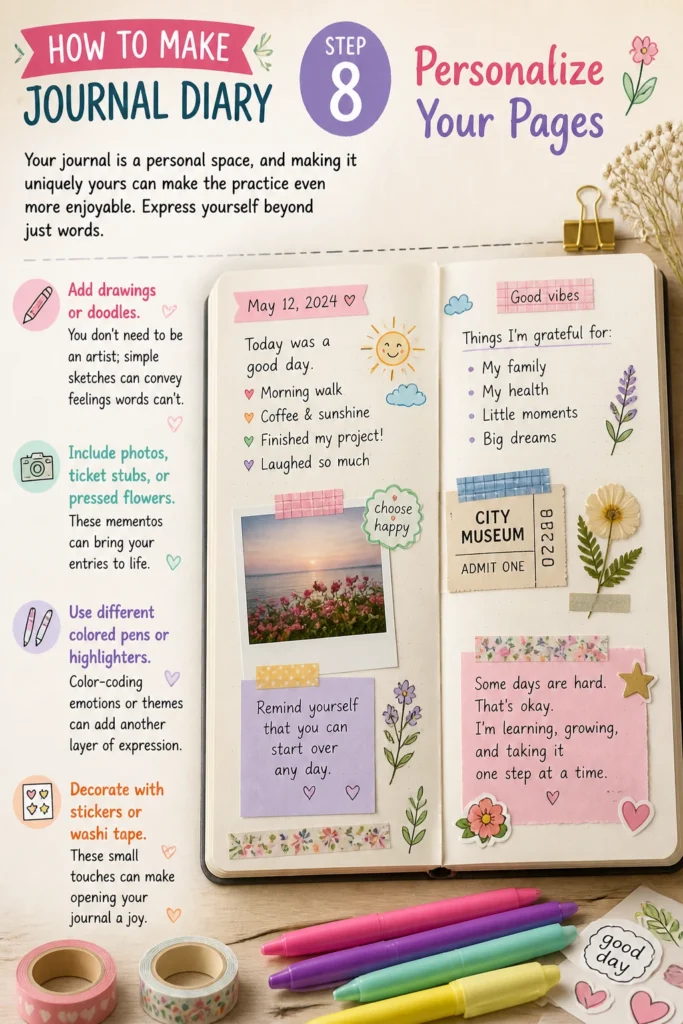
Express yourself beyond just words.
- Add drawings or doodles. You don’t need to be an artist; simple sketches can convey feelings words can’t.
- Include photos, ticket stubs, or pressed flowers. These mementos can bring your entries to life.
- Use different colored pens or highlighters. Color-coding emotions or themes can add another layer of expression.
- Decorate with stickers or washi tape. These small touches can make opening your journal a joy.
Common Mistakes to Avoid
Waiting for Perfection
Many people delay starting a journal because they’re searching for the “perfect” notebook or the “perfect” time. This quest for an ideal beginning often leads to never starting at all. The best approach is to simply begin with what you have, accepting that your journal will evolve with you.
Overthinking What to Write
The blank page can feel daunting, leading to anxiety about writing something profound or interesting. Remember, your journal is a private space for your raw thoughts and feelings. There’s no audience to impress. Just write whatever comes to mind, even if it feels mundane or silly.
Treating it Like a Chore
If journaling starts to feel like another item on your to-do list, you might lose motivation. Instead of forcing yourself to write, approach it as an opportunity for self-care or reflection. Keep sessions short if needed, and allow yourself to skip a day without guilt if you’re genuinely not feeling it.
Comparing Your Journal to Others
With the rise of social media, it’s easy to see beautifully curated journals and feel like yours isn’t “good enough.” Your journal is a unique reflection of your inner world. Its value comes from its authenticity and personal meaning, not from how aesthetically pleasing it appears to others.
Troubleshooting
Feeling Stuck or Uninspired
It’s common to hit a wall where you feel you have nothing to write. When this happens, try using a simple prompt like “What am I thinking about right now?” or “What’s one thing I learned today?” You can also free-write for a few minutes, writing anything that comes to mind, even if it’s “I don’t know what to write.” Often, this unblocks your thoughts.
Not Enough Time
If finding time is a challenge, remember that journaling doesn’t require long sessions. Even five minutes of focused writing can be beneficial. Try integrating it into an existing routine, like during your morning coffee or before bed. You can also carry a small notebook with you to jot down thoughts during brief waits or commutes.
Privacy Concerns
Some people worry about others reading their private thoughts. To address this, choose a journal that can be securely stored or locked. Alternatively, use a digital journaling app with password protection. The most important thing is to feel safe and uninhibited when you write, so find a solution that gives you peace of mind.
Key Takeaways
- Start simply: You only need a notebook and a pen to begin your journaling practice.
- Set your intention: Understand why you want to journal to guide your entries and maintain motivation.
- Be consistent, not perfect: Regular, short sessions are more impactful than infrequent, long ones.
- Embrace authenticity: Your journal is for your genuine thoughts and feelings, free from judgment.
- Personalize your space: Make your journal uniquely yours through doodles, photos, or decorations.
- Reflect and grow: Periodically reviewing past entries offers valuable insights into your personal journey.
Frequently Asked Questions
How often should I write?
The ideal frequency varies for everyone. Some people journal daily, while others prefer a few times a week or even monthly. The best approach is to find a rhythm that feels sustainable and beneficial to you, without turning it into a rigid obligation.
What if I run out of things to say?
This is a common experience. When you feel stuck, try using journaling prompts, reflecting on your day’s emotions, or simply writing about what’s currently around you. Sometimes, just describing your environment can lead to deeper thoughts. Remember, it’s okay for entries to be short or even just a few words.
Can I use a digital journal?
Absolutely! Digital journals offer convenience, searchability, and often password protection. Apps like Day One, Journey, or even a simple document on your computer or phone can serve as excellent journaling platforms. Choose what feels most comfortable and accessible for you.
Is there a “right” way to journal?
There is no single “right” way to journal. Your journal is a personal tool for self-discovery and reflection. The most effective way is the one that works best for you, helps you achieve your personal goals, and encourages you to keep writing. Experiment and find what fits your style.
Our Top Recommended Finds
- Classic Lined Notebook: A simple, sturdy notebook with lined pages provides a familiar and versatile canvas for all your thoughts.
- Smooth Gel Pen Set: Writing with a comfortable, free-flowing pen makes the journaling experience more enjoyable and less of a chore.
- Decorative Washi Tape: Easy to use and reposition, washi tape adds a touch of personality and color to your pages without being overwhelming.
Your Journey Begins Today
Starting a journal diary is a gift you give to yourself, a quiet corner where your thoughts can truly breathe.
It’s an ongoing conversation with your inner self, offering clarity, comfort, and a unique record of your life.
Don’t wait for the perfect moment or the perfect tools; simply open a page and begin to write your story today.