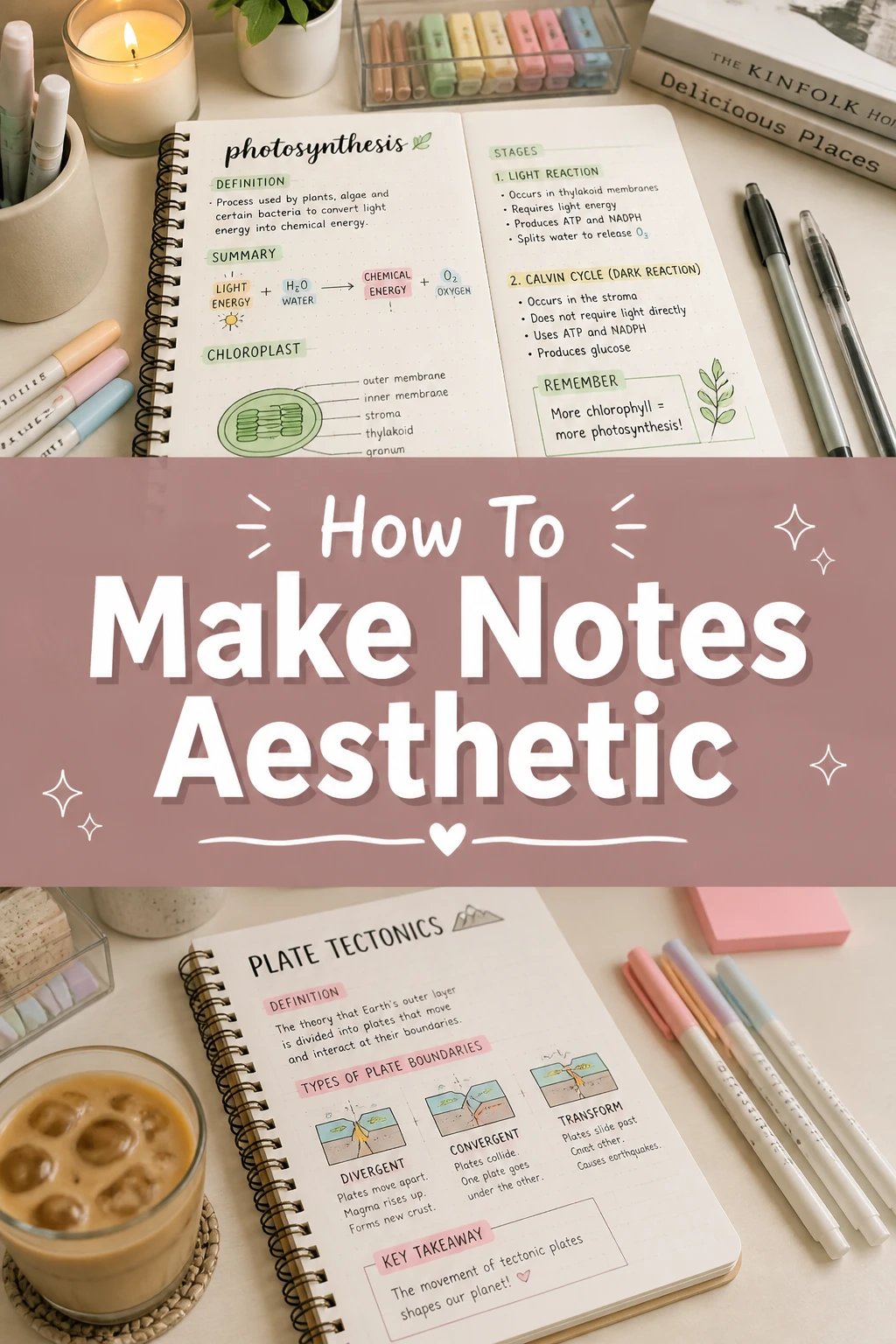
✨ How To Make Notes Aesthetic
Making your notes look beautiful can transform your study sessions and boost your motivation. I’ve spent countless hours refining my own note-taking style, discovering that well-organized, visually pleasing notes truly enhance understanding and recall. This guide shares all my best tips and tricks to help you create stunning notes that you’ll love to revisit.
You’ll soon discover how simple it is to add a touch of artistry to your everyday learning.
Quick Overview
This guide will walk you through the process of creating visually appealing and effective notes. You’ll learn how to incorporate design principles and practical tools to make your study materials shine. Get ready to transform your note-taking habits.
- Time needed: 1-2 hours for initial setup and practice, then integrated into your regular note-taking.
- Difficulty: Beginner
- What you’ll need: Paper (lined, dotted, or blank), pens (various colors, fine-liners, brush pens), highlighters, ruler, sticky notes, and a dash of creativity.
Step-by-Step Instructions
Step 1: Gather Your Essential Tools
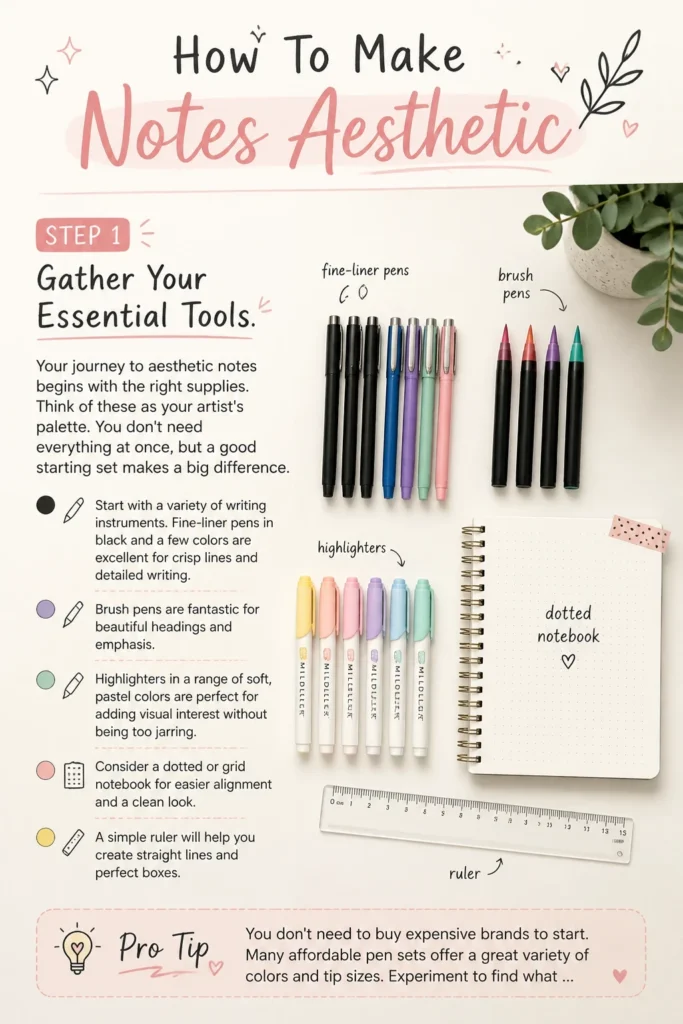
Your journey to aesthetic notes begins with the right supplies. Think of these as your artist’s palette. You don’t need everything at once, but a good starting set makes a big difference.
Start with a variety of writing instruments. Fine-liner pens in black and a few colors are excellent for crisp lines and detailed writing. Brush pens are fantastic for beautiful headings and emphasis.
Highlighters in a range of soft, pastel colors are perfect for adding visual interest without being too jarring. Consider a dotted or grid notebook for easier alignment and a clean look. A simple ruler will help you create straight lines and perfect boxes.
Pro Tip: You don’t need to buy expensive brands to start. Many affordable pen sets offer a great variety of colors and tip sizes. Experiment to find what feels best in your hand.
Step 2: Define Your Color Palette
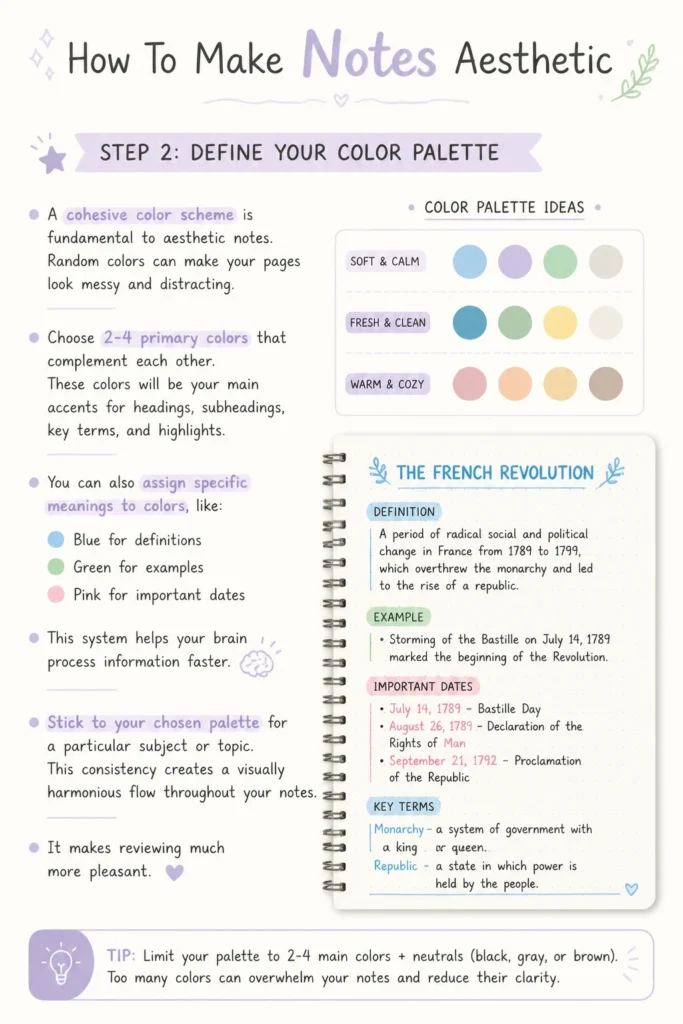
A cohesive color scheme is fundamental to aesthetic notes. Random colors can make your pages look messy and distracting. Choose 2-4 primary colors that complement each other.
These colors will be your main accents for headings, subheadings, key terms, and highlights. You can also assign specific meanings to colors, like blue for definitions, green for examples, and pink for important dates. This system helps your brain process information faster.
Stick to your chosen palette for a particular subject or topic. This consistency creates a visually harmonious flow throughout your notes. It makes reviewing much more pleasant.
Step 3: Master Different Font Styles and Hand Lettering
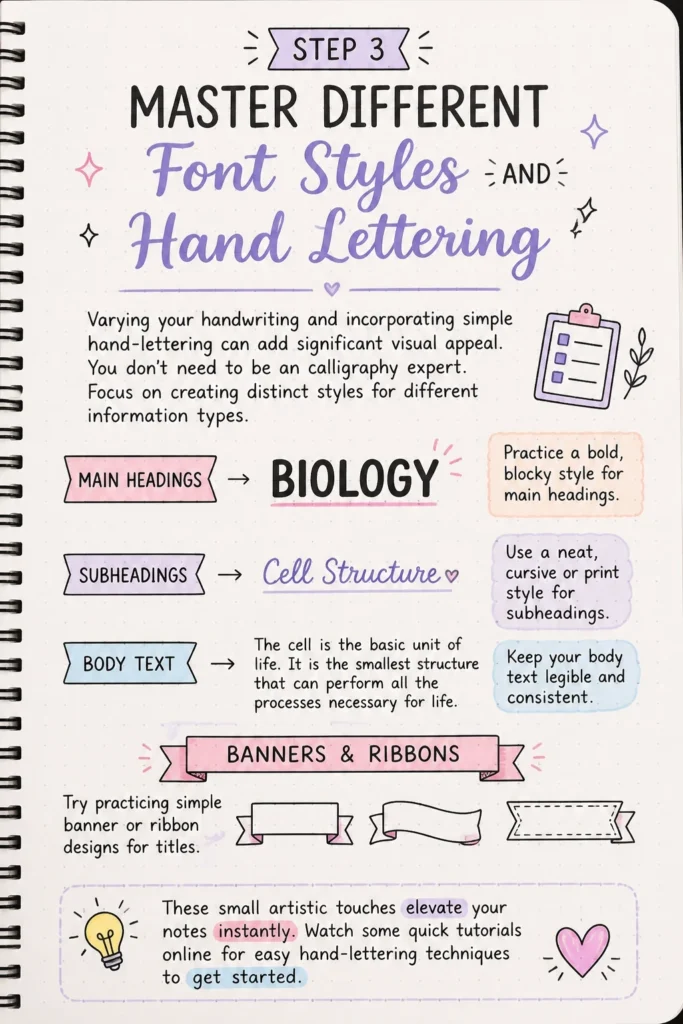
Varying your handwriting and incorporating simple hand-lettering can add significant visual appeal. You don’t need to be an calligraphy expert. Focus on creating distinct styles for different information types.
Practice a bold, blocky style for main headings. Use a neat, cursive or print style for subheadings. Keep your body text legible and consistent.
Try practicing simple banner or ribbon designs for titles. These small artistic touches elevate your notes instantly. Watch some quick tutorials online for easy hand-lettering techniques to get started.
Step 4: Structure Your Layout with Purpose
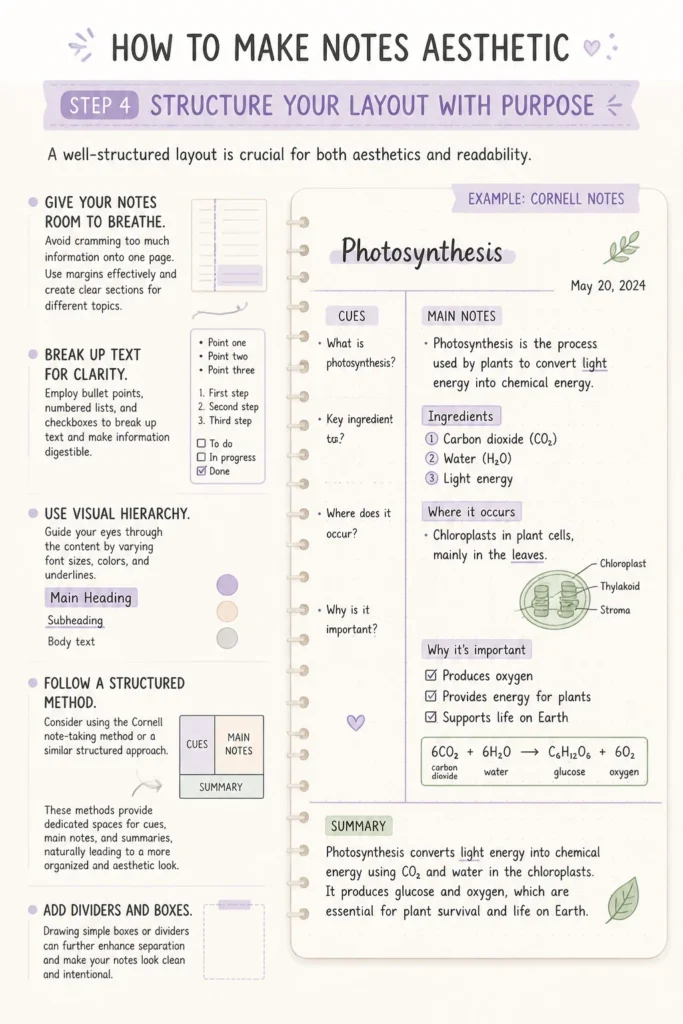
A well-structured layout is crucial for both aesthetics and readability. Avoid cramming too much information onto one page. Give your notes room to breathe.
Use margins effectively and create clear sections for different topics. Employ bullet points, numbered lists, and checkboxes to break up text and make information digestible. Visual hierarchy guides your eyes through the content.
Consider using the Cornell note-taking method or a similar structured approach. These methods provide dedicated spaces for cues, main notes, and summaries, naturally leading to a more organized and aesthetic look. Drawing simple boxes or dividers can further enhance separation.
Step 5: Incorporate Visual Elements
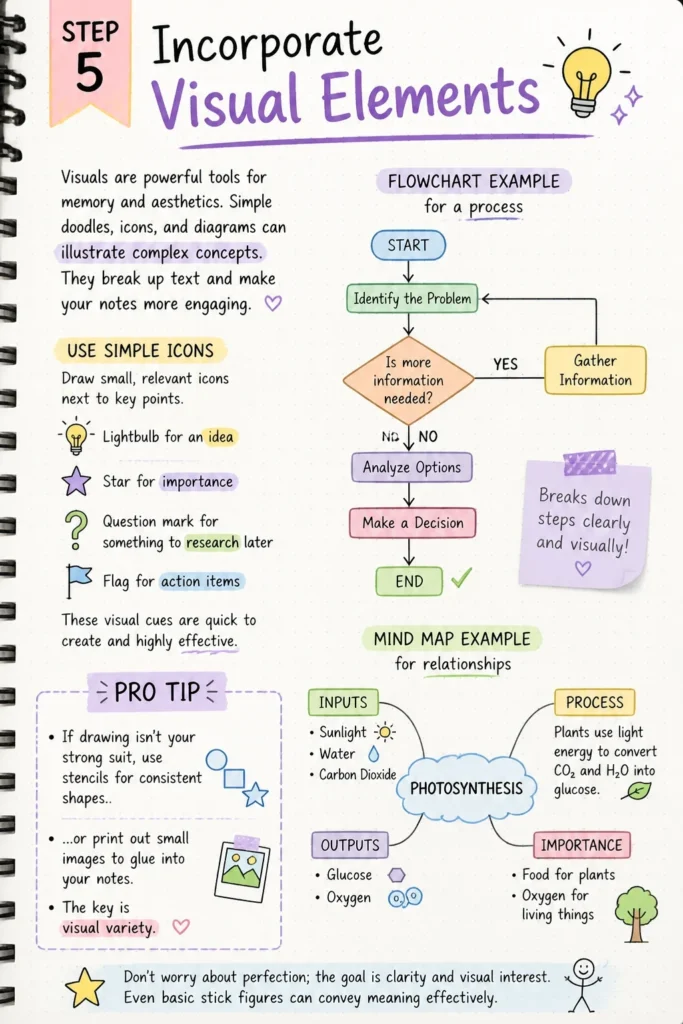
Visuals are powerful tools for memory and aesthetics. Simple doodles, icons, and diagrams can illustrate complex concepts. They break up text and make your notes more engaging.
Draw small, relevant icons next to key points. A lightbulb for an idea, a star for importance, or a question mark for something to research later. These visual cues are quick to create and highly effective.
Create simple flowcharts or mind maps for processes or relationships. Don’t worry about perfection; the goal is clarity and visual interest. Even basic stick figures can convey meaning effectively.
Pro Tip: If drawing isn’t your strong suit, use stencils for consistent shapes or print out small images to glue into your notes. The key is visual variety.
Step 6: Utilize Highlighters and Underlining Thoughtfully
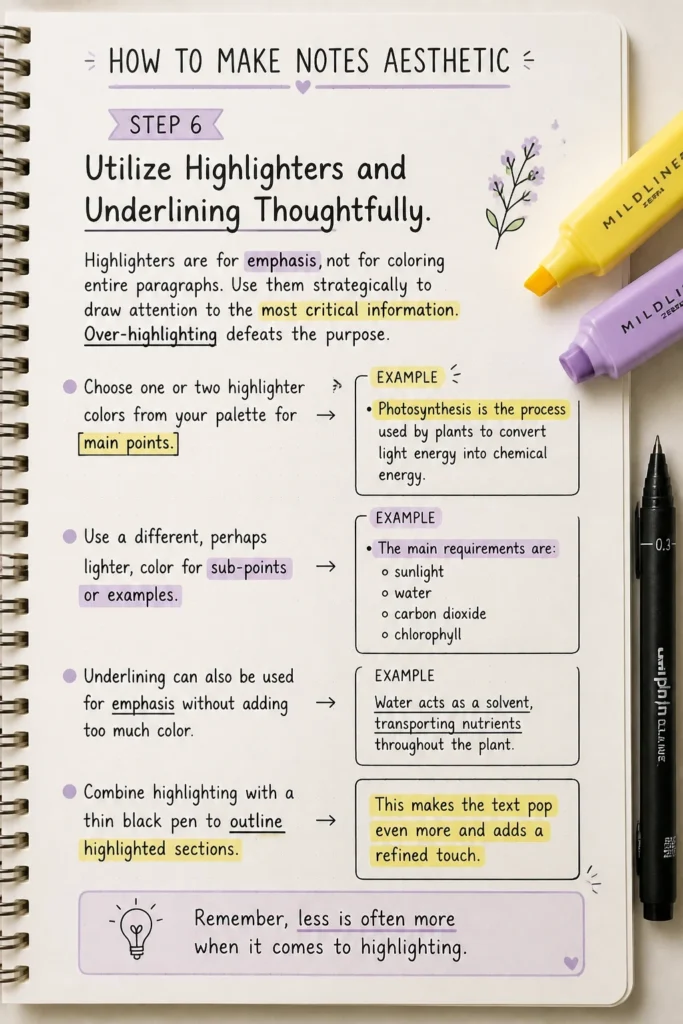
Highlighters are for emphasis, not for coloring entire paragraphs. Use them strategically to draw attention to the most critical information. Over-highlighting defeats the purpose.
Choose one or two highlighter colors from your palette for main points. Use a different, perhaps lighter, color for sub-points or examples. Underlining can also be used for emphasis without adding too much color.
Combine highlighting with a thin black pen to outline highlighted sections. This makes the text pop even more and adds a refined touch. Remember, less is often more when it comes to highlighting.
Step 7: Add Decorative Touches and Embellishments
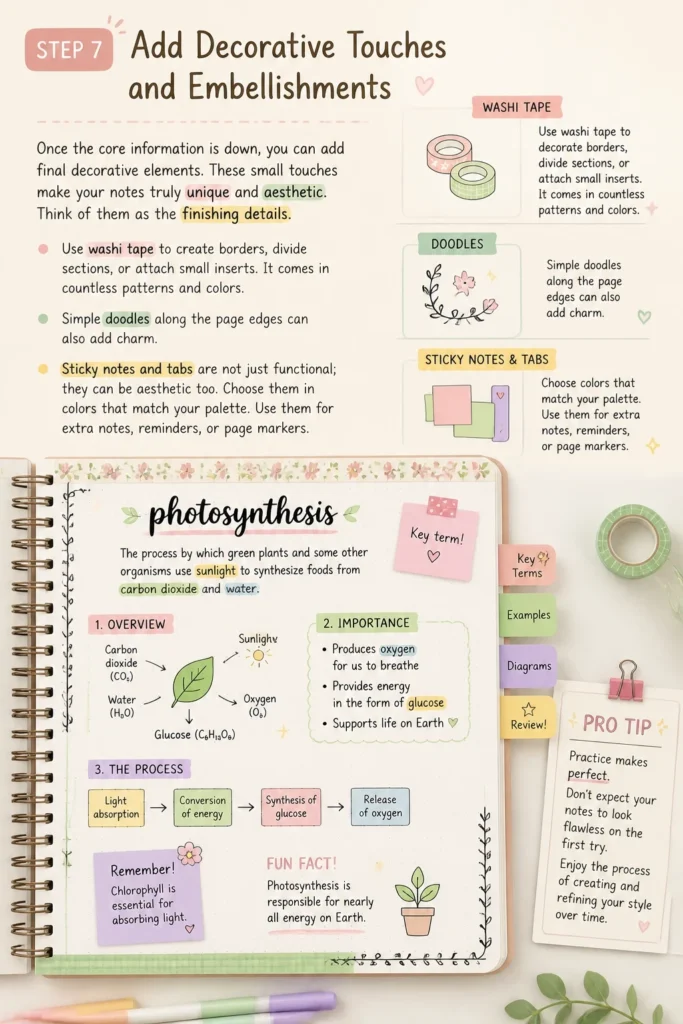
Once the core information is down, you can add final decorative elements. These small touches make your notes truly unique and aesthetic. Think of them as the finishing details.
Use washi tape to create borders, divide sections, or attach small inserts. It comes in countless patterns and colors. Simple doodles along the page edges can also add charm.
Sticky notes and tabs are not just functional; they can be aesthetic too. Choose them in colors that match your palette. Use them for extra notes, reminders, or page markers.
Pro Tip: Practice makes perfect. Don’t expect your notes to look flawless on the first try. Enjoy the process of creating and refining your style over time.
Common Mistakes to Avoid
Overcrowding Your Pages
Trying to fit too much information onto a single page makes notes look cluttered and overwhelming. This negates the purpose of aesthetic notes, which is to make information more accessible. Instead, give your content room to breathe. Use ample white space, break up long paragraphs with bullet points, and don’t be afraid to use an extra page if needed.
Inconsistent Color Schemes
Jumping between too many different colors or using clashing combinations creates visual chaos. Your notes will look messy and disorganized, making it harder to distinguish key information. Establish a consistent color palette of 2-4 colors for each subject or topic and stick to it. This creates harmony and helps with information recall.
Excessive Highlighting and Underlining
Highlighting every other sentence or underlining entire paragraphs renders the technique useless. If everything is emphasized, nothing truly stands out. This can also make your notes difficult to read and visually busy. Be selective with your highlighting; focus only on the most critical words, phrases, or sentences.
Neglecting Legibility for Style
While aesthetics are important, the primary purpose of notes is to convey information clearly. If your fancy fonts or intricate designs make your text hard to read, you’re missing the point. Always prioritize legibility. Ensure your handwriting is clear, and your chosen decorative elements enhance, rather than hinder, readability.
Troubleshooting
My Notes Still Look Messy
If your notes still appear messy, it’s often due to a lack of structure or too much visual information. Take a step back and simplify. Focus on creating clear sections using headings and subheadings. Reduce the number of colors you’re using.
Try drawing light pencil lines before writing to ensure straight lines and consistent spacing. Sometimes, using a grid or dotted notebook can naturally improve alignment and reduce visual clutter. Practice breaking down information into smaller, digestible chunks.
My Hand Lettering Isn’t Good Enough
Don’t let perfect hand lettering be the enemy of good notes. The goal is clear, distinct styles, not professional calligraphy. Start with simple block letters or a slightly embellished print.
Practice basic shapes and lines on a separate sheet of paper. Focus on consistency in size and spacing rather than intricate flourishes. Remember, a neat, consistent everyday handwriting style can be just as aesthetic as elaborate lettering.
I Run Out of Space Too Quickly
Running out of space indicates you might be trying to fit too much content into a small area. This can be solved by adjusting your note-taking strategy. Consider using larger paper or a notebook with more pages.
Embrace abbreviations and symbols to condense information. Use sticky notes for additional details or tangential thoughts that don’t need to be in the main flow. Don’t be afraid to start a new page even if the current one isn’t completely full; white space is your friend.
Key Takeaways
- Selecting a limited, complementary color palette significantly enhances visual appeal and aids information recall.
- Utilizing varied font styles and simple hand-lettering creates a clear visual hierarchy for different types of information.
- Structured layouts with ample white space prevent overcrowding and make notes easier to read and comprehend.
- Incorporating simple doodles, icons, and diagrams boosts engagement and helps illustrate complex concepts visually.
- Strategic use of highlighters and underlining emphasizes key points without overwhelming the page.
- Consistent practice and experimentation with tools and techniques are essential for developing your unique aesthetic note-taking style.
Frequently Asked Questions
Can I make aesthetic notes digitally?
Absolutely! Digital note-taking apps like GoodNotes, Notability, or OneNote offer incredible flexibility for aesthetic notes. You can easily change pen colors, highlight, add images, and even use digital stickers. Many apps also feature various paper templates like grids or dots.
What’s the best paper for aesthetic notes?
Dotted or grid paper is often preferred for aesthetic notes because it provides subtle guidance for straight lines, consistent spacing, and drawing shapes without being as distracting as lined paper. Blank paper offers ultimate freedom but requires more practice for neatness. Smooth paper stock helps pens glide better.
How do I make my notes aesthetic quickly during a lecture?
During a fast-paced lecture, focus on core aesthetic principles: a consistent color for headings, quick underlining for key terms, and clear separation of ideas with bullet points. Don’t worry about elaborate hand-lettering or intricate doodles. You can always go back and add decorative elements later when reviewing.
Is it worth the extra time to make notes aesthetic?
Many find the extra time invested in aesthetic notes to be highly beneficial. Visually appealing notes can increase motivation to study, improve memory retention through visual cues, and make the review process more enjoyable. It’s a personal preference, but the benefits often outweigh the initial time investment for many learners.
Our Top Recommended Finds
- Zebra Sarasa Clip Gel Pens: These pens come in a wide array of vibrant colors, write smoothly, and dry quickly, making them perfect for colorful and neat notes.
- Mildliner Highlighters: Known for their soft, pastel colors, Mildliners are excellent for highlighting without bleeding through pages or being too harsh on the eyes.
- Archer & Olive Dotted Notebooks: These notebooks feature thick, high-quality paper that prevents ink bleed-through, ideal for intricate designs and various pen types.
Embrace Your Creative Note-Taking Journey
Transforming your notes into works of art is a rewarding process that enhances both your learning and your personal style. It’s about finding joy in the details and making your study materials truly your own. Each step you take, from choosing a color palette to adding a small doodle, builds a more engaging and effective learning experience.
Begin experimenting with these techniques today. Pick one or two tips that resonate with you and integrate them into your next study session. You’ll be amazed at how quickly your notes evolve into something beautiful and highly functional.